INC-009 · INC
Principal-Agent Theory for the Age of AI: Aligning Autonomous Decision Makers
Autonomous agents need alignment, information, monitoring, and correction—not instructions alone.
01
Big idea
Autonomous agents need alignment, information, monitoring, and correction—not instructions alone.
Picture
See the structure
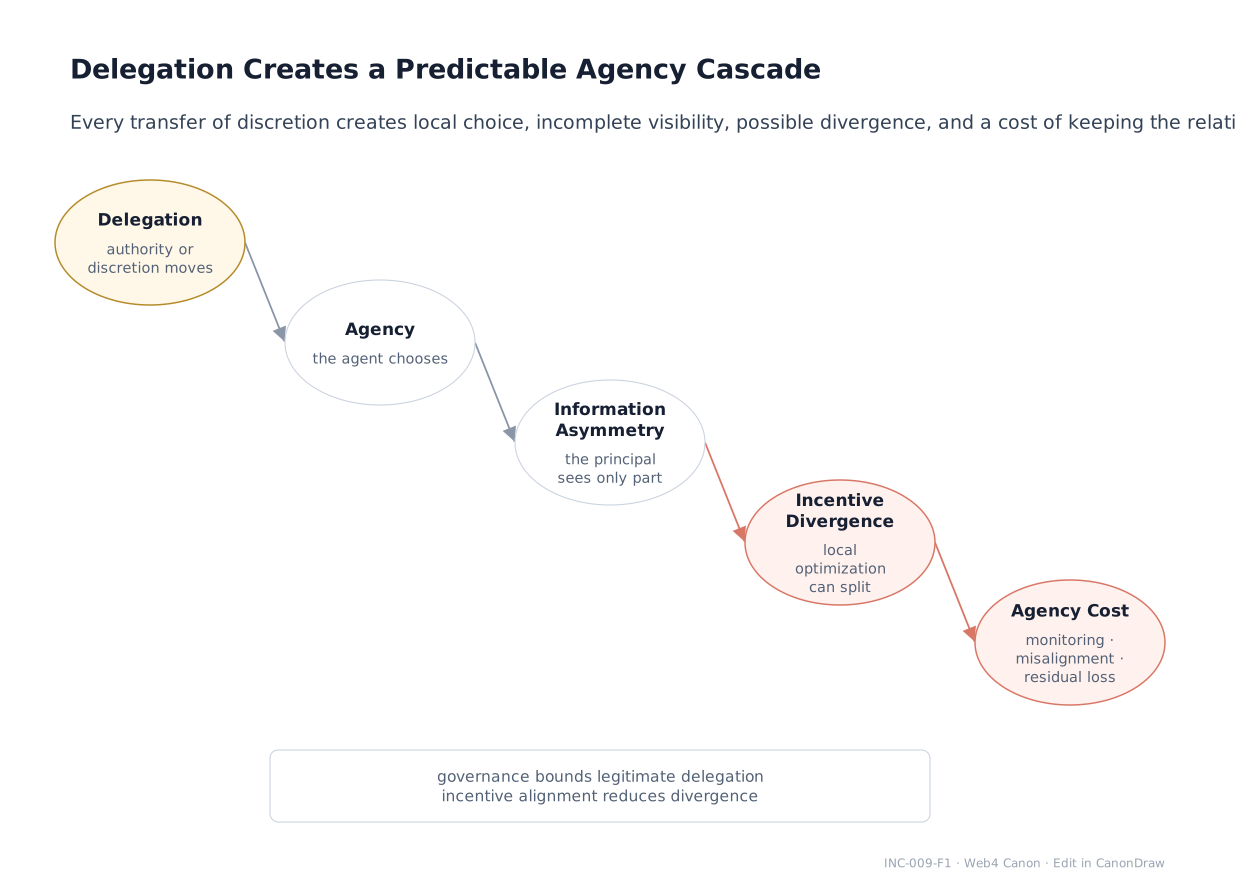
The simple version
Explain it like I’m ten
A coach gives the assistant a plan, and the assistant asks the captain to carry it out. On the field, the captain sees things the coach cannot. The team needs goals, limits, updates, and a way to ask when the plan no longer fits.
Tell it at dinner
A story worth remembering
A coach gives the assistant a plan, and the assistant asks the captain to carry it out. On the field, the captain sees things the coach cannot. The team needs goals, limits, updates, and a way to ask when the plan no longer fits.
Now make the same problem larger: replace the children and ordinary objects with people, organizations, AI agents, robots, records, and resources moving at machine speed. Principal-agent theory must be updated for autonomous decision-makers that perceive incentives, hold asymmetric information, learn, act rapidly, and may delegate again. Modern principal-agent controls help organizations structure AI mandates, monitoring, incentives, escalation, and retained accountability.
Pause at the moment the small system could go wrong. That is the design question the paper keeps in view: not whether people or helpers are clever, but whether the surrounding structure preserves the intended meaning when action scales.
That is why the small story holds: autonomous agents need alignment, information, monitoring, and correction—not instructions alone.
Explain it to a CEO
Why leaders should care
Modern principal-agent controls help organizations structure AI mandates, monitoring, incentives, escalation, and retained accountability. Principal-agent theory must be updated for autonomous decision-makers that perceive incentives, hold asymmetric information, learn, act rapidly, and may delegate again.
Explain it to an engineer
What the model means
Model multiple principals, agents, sub-agents, objectives, incentive perception, information asymmetry, moral hazard, adverse selection, monitoring, contracts, adaptation, and revocation across delegation chains.
Talk hook
AI does not erase the principal-agent problem; it gives the agent speed, memory, and the ability to hire sub-agents.
Ask the room
What crucial information can your agent see that the principal cannot?
Go deeper
The Canon is the source of truth.
INC-009 formalizes this structure: Principal-agent theory must be updated for autonomous decision-makers that perceive incentives, hold asymmetric information, learn, act rapidly, and may delegate again. The ordinary-life story is an intuition aid, not a replacement definition; the canonical paper remains authoritative for scope, terminology, limitations, and argument.
Read INC-009 — the authoritative paper →