WEB4-011 · WEB4
Protocols of Delegated Authority
Protocols give every delegation the same readable handoff rules.
01
Big idea
Protocols give every delegation the same readable handoff rules.
Picture
See the structure
The simple version
Explain it like I’m ten
In a relay race, every runner knows what the baton means, where a handoff may happen, and when a handoff does not count. Shared rules let people from different teams understand the same action without making up new rules each time.
Tell it at dinner
A story worth remembering
In a relay race, every runner knows what the baton means, where a handoff may happen, and when a handoff does not count. Shared rules let people from different teams understand the same action without making up new rules each time.
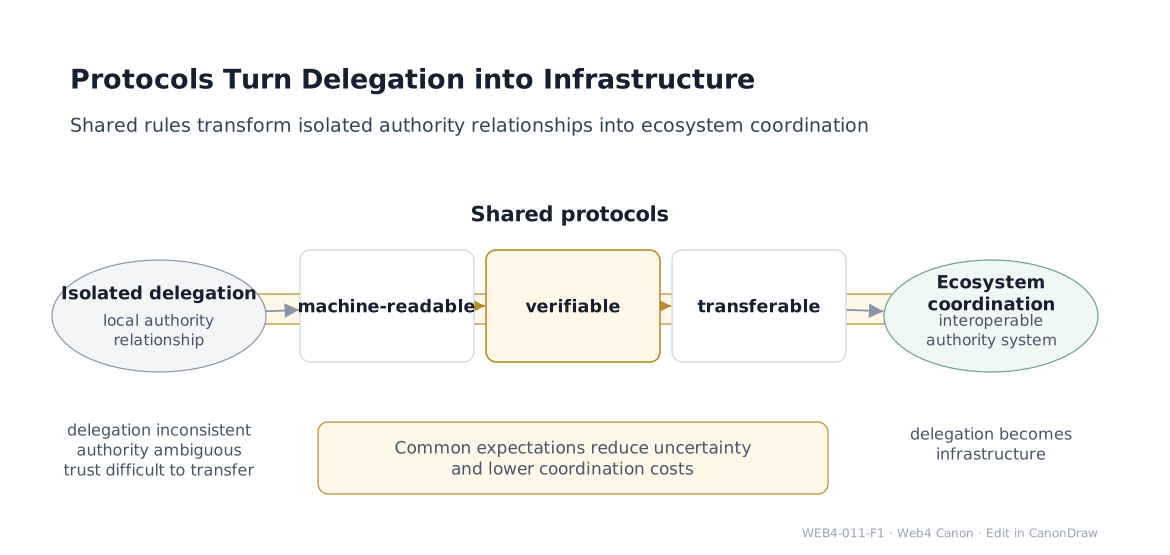
Now make the same problem larger: replace the children and ordinary objects with people, organizations, AI agents, robots, records, and resources moving at machine speed. Delegated authority requires interoperable protocols for assignment, verification, scope, transfer, audit, revocation, and accountability. Protocols prevent delegation from becoming trapped in vendor silos and enable trustworthy coordination across organizational boundaries.
Pause at the moment the small system could go wrong. That is the design question the paper keeps in view: not whether people or helpers are clever, but whether the surrounding structure preserves the intended meaning when action scales.
That is why the small story holds: protocols give every delegation the same readable handoff rules.
Explain it to a CEO
Why leaders should care
Protocols prevent delegation from becoming trapped in vendor silos and enable trustworthy coordination across organizational boundaries. Delegated authority requires interoperable protocols for assignment, verification, scope, transfer, audit, revocation, and accountability.
Explain it to an engineer
What the model means
Specify interoperable message formats, state transitions, verification rules, constraints, error semantics, and revocation behavior across identity, authority, workflow, registry, trust, and governance layers.
Talk hook
Delegation cannot become infrastructure until different systems agree what a valid handoff means.
Ask the room
Which delegation today would fail if it crossed into another vendor or institution?
Go deeper
The Canon is the source of truth.
WEB4-011 formalizes this structure: Delegated authority requires interoperable protocols for assignment, verification, scope, transfer, audit, revocation, and accountability. The ordinary-life story is an intuition aid, not a replacement definition; the canonical paper remains authoritative for scope, terminology, limitations, and argument.
Read WEB4-011 — the authoritative paper →