WEB4-006 · WEB4
Delegation as Infrastructure
Delegation scales when permission becomes dependable infrastructure.
01
Big idea
Delegation scales when permission becomes dependable infrastructure.
Picture
See the structure
The simple version
Explain it like I’m ten
Telling one bicycle where to go is easy. Helping a whole town travel safely needs roads, signs, lanes, crossings, and a way to close a road when it becomes dangerous. The roads make many safe trips possible without giving every rider every path.
Tell it at dinner
A story worth remembering
Telling one bicycle where to go is easy. Helping a whole town travel safely needs roads, signs, lanes, crossings, and a way to close a road when it becomes dangerous. The roads make many safe trips possible without giving every rider every path.
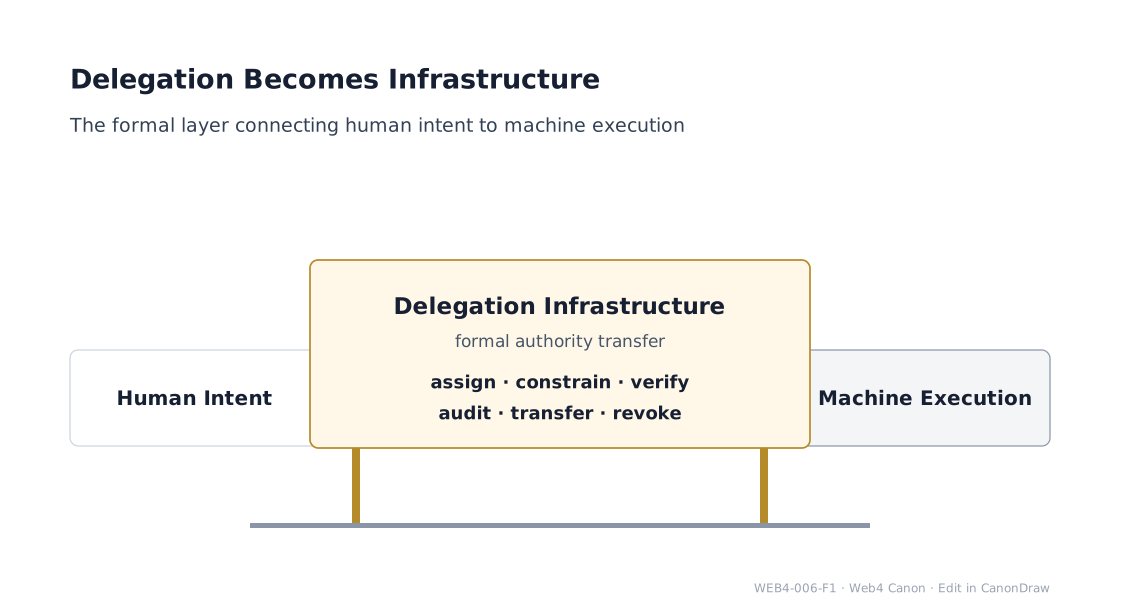
Now make the same problem larger: replace the children and ordinary objects with people, organizations, AI agents, robots, records, and resources moving at machine speed. Delegation must become explicit infrastructure for assignment, constraint, verification, transfer, audit, and revocation rather than remaining an informal instruction. Organizations gain repeatable delegation across products and teams instead of fragile one-off agent permissions.
Pause at the moment the small system could go wrong. That is the design question the paper keeps in view: not whether people or helpers are clever, but whether the surrounding structure preserves the intended meaning when action scales.
That is why the small story holds: delegation scales when permission becomes dependable infrastructure.
Explain it to a CEO
Why leaders should care
Organizations gain repeatable delegation across products and teams instead of fragile one-off agent permissions. Delegation must become explicit infrastructure for assignment, constraint, verification, transfer, audit, and revocation rather than remaining an informal instruction.
Explain it to an engineer
What the model means
Build common delegation objects, lifecycle operations, policy evaluation, evidence capture, and revocation interfaces. Infrastructure enables consistent governance but does not remove the need for contextual authorization.
Talk hook
We built roads for traffic; now we need roads for delegated intelligence.
Ask the room
Which part of delegation in your organization is still an informal message or spreadsheet?
Go deeper
The Canon is the source of truth.
WEB4-006 formalizes this structure: Delegation must become explicit infrastructure for assignment, constraint, verification, transfer, audit, and revocation rather than remaining an informal instruction. The ordinary-life story is an intuition aid, not a replacement definition; the canonical paper remains authoritative for scope, terminology, limitations, and argument.
Read WEB4-006 — the authoritative paper →