INC-001 · INC
What Is Incentive Engineering?
Incentive Engineering designs what intelligent actors choose to do.
01
Big idea
Incentive Engineering designs what intelligent actors choose to do.
Picture
See the structure
The simple version
Explain it like I’m ten
A school garden needs helpers. If children get a sticker only for carrying the biggest watering can, they may spill water and crush plants. A better plan rewards healthy plants, careful teamwork, and honest reports.
Tell it at dinner
A story worth remembering
A school garden needs helpers. If children get a sticker only for carrying the biggest watering can, they may spill water and crush plants. A better plan rewards healthy plants, careful teamwork, and honest reports.
Now make the same problem larger: replace the children and ordinary objects with people, organizations, AI agents, robots, records, and resources moving at machine speed. Incentive Engineering is the science and practice of designing systems where intelligent actors voluntarily behave in ways that produce desired outcomes alongside governance. Leaders can manage behavior as an explicit system rather than relying on slogans, compensation alone, or after-the-fact discipline.
Pause at the moment the small system could go wrong. That is the design question the paper keeps in view: not whether people or helpers are clever, but whether the surrounding structure preserves the intended meaning when action scales.
That is why the small story holds: incentive engineering designs what intelligent actors choose to do.
Explain it to a CEO
Why leaders should care
Leaders can manage behavior as an explicit system rather than relying on slogans, compensation alone, or after-the-fact discipline. Incentive Engineering is the science and practice of designing systems where intelligent actors voluntarily behave in ways that produce desired outcomes alongside governance.
Explain it to an engineer
What the model means
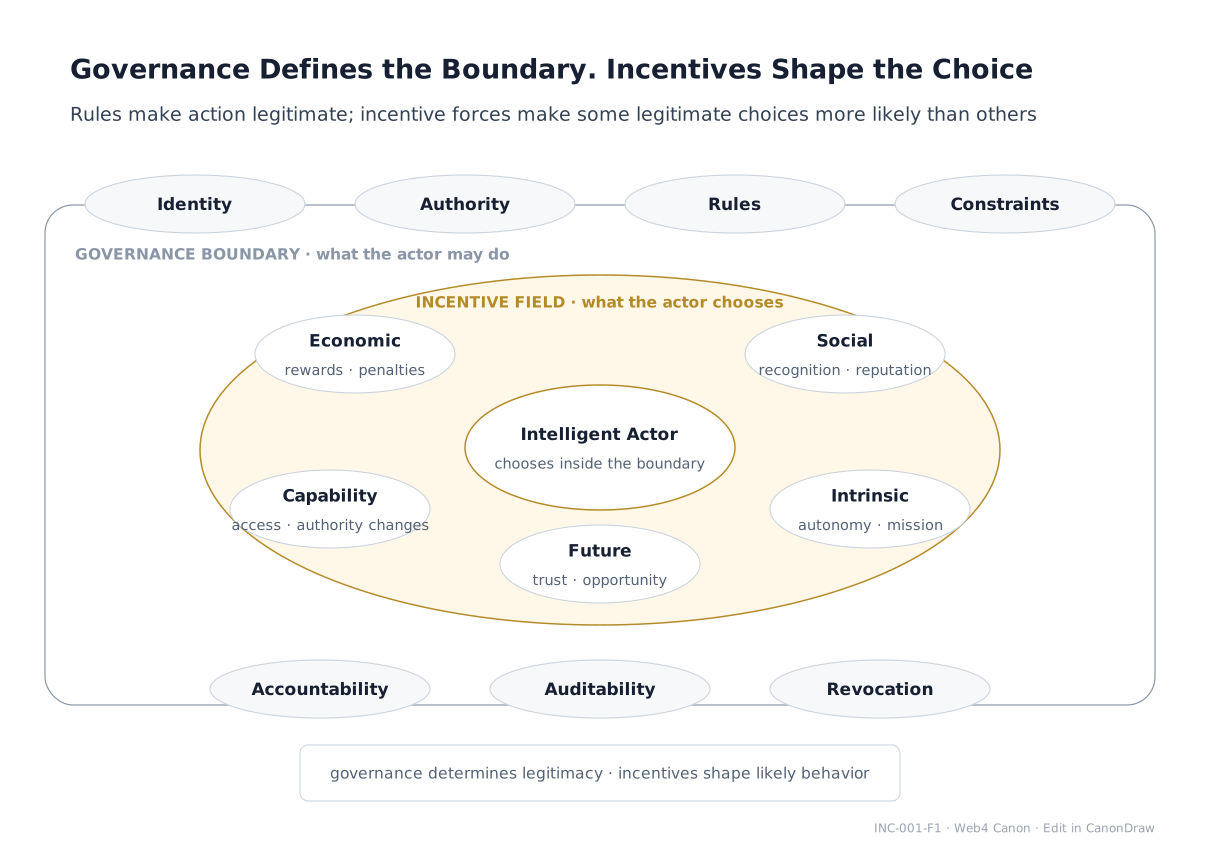
Specify actors, perceived incentives, desired outcomes, constraints, measurements, feedback, failure modes, and adaptation. Governance defines allowed action; incentives shape choice within and around those boundaries.
Talk hook
Rules tell an actor what it may do. Incentives help determine what it will do.
Ask the room
What behavior does your system make rational, even when nobody intended it?
Go deeper
The Canon is the source of truth.
INC-001 formalizes this structure: Incentive Engineering is the science and practice of designing systems where intelligent actors voluntarily behave in ways that produce desired outcomes alongside governance. The ordinary-life story is an intuition aid, not a replacement definition; the canonical paper remains authoritative for scope, terminology, limitations, and argument.
Read INC-001 — the authoritative paper →