INC-004 · INC
Designing Incentive Systems: An Engineering Framework for Intelligent Organizations
Effective incentive systems are engineered and tested, not guessed.
01
Big idea
Effective incentive systems are engineered and tested, not guessed.
Picture
See the structure
The simple version
Explain it like I’m ten
Children make a treasure hunt. They choose the goal, write clues, ask another team to test them, watch where players get confused, and fix the clues before the big game.
Tell it at dinner
A story worth remembering
Children make a treasure hunt. They choose the goal, write clues, ask another team to test them, watch where players get confused, and fix the clues before the big game.
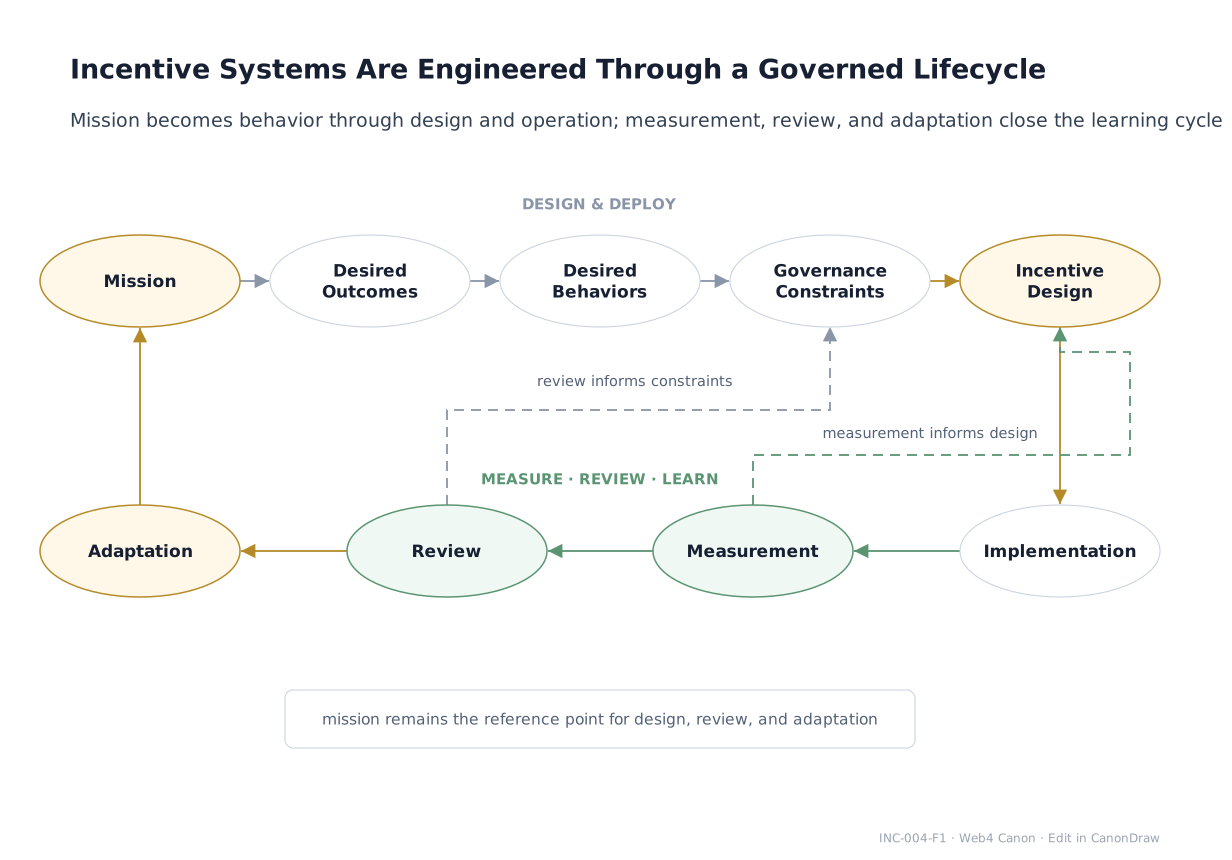
Now make the same problem larger: replace the children and ordinary objects with people, organizations, AI agents, robots, records, and resources moving at machine speed. Incentive system design requires a repeatable lifecycle from objectives and actor analysis through mechanisms, safeguards, implementation, measurement, review, and improvement. A disciplined design method turns incentives from ad hoc rewards into governable organizational infrastructure.
Pause at the moment the small system could go wrong. That is the design question the paper keeps in view: not whether people or helpers are clever, but whether the surrounding structure preserves the intended meaning when action scales.
That is why the small story holds: effective incentive systems are engineered and tested, not guessed.
Explain it to a CEO
Why leaders should care
A disciplined design method turns incentives from ad hoc rewards into governable organizational infrastructure. Incentive system design requires a repeatable lifecycle from objectives and actor analysis through mechanisms, safeguards, implementation, measurement, review, and improvement.
Explain it to an engineer
What the model means
Use an iterative lifecycle: define outcomes and boundaries; model actors and perception; select mechanisms; test failure modes; instrument behavior; deploy carefully; audit and adapt. Include governance and ethics gates.
Talk hook
Would you launch critical software without testing it? Why launch an incentive system that way?
Ask the room
Which stage of incentive design does your organization usually skip?
Go deeper
The Canon is the source of truth.
INC-004 formalizes this structure: Incentive system design requires a repeatable lifecycle from objectives and actor analysis through mechanisms, safeguards, implementation, measurement, review, and improvement. The ordinary-life story is an intuition aid, not a replacement definition; the canonical paper remains authoritative for scope, terminology, limitations, and argument.
Read INC-004 — the authoritative paper →