WEB4-030 · WEB4
The Web4 Operating Model
Web4 is an operating model for governable intelligent institutions.
01
Big idea
Web4 is an operating model for governable intelligent institutions.
Picture
See the structure
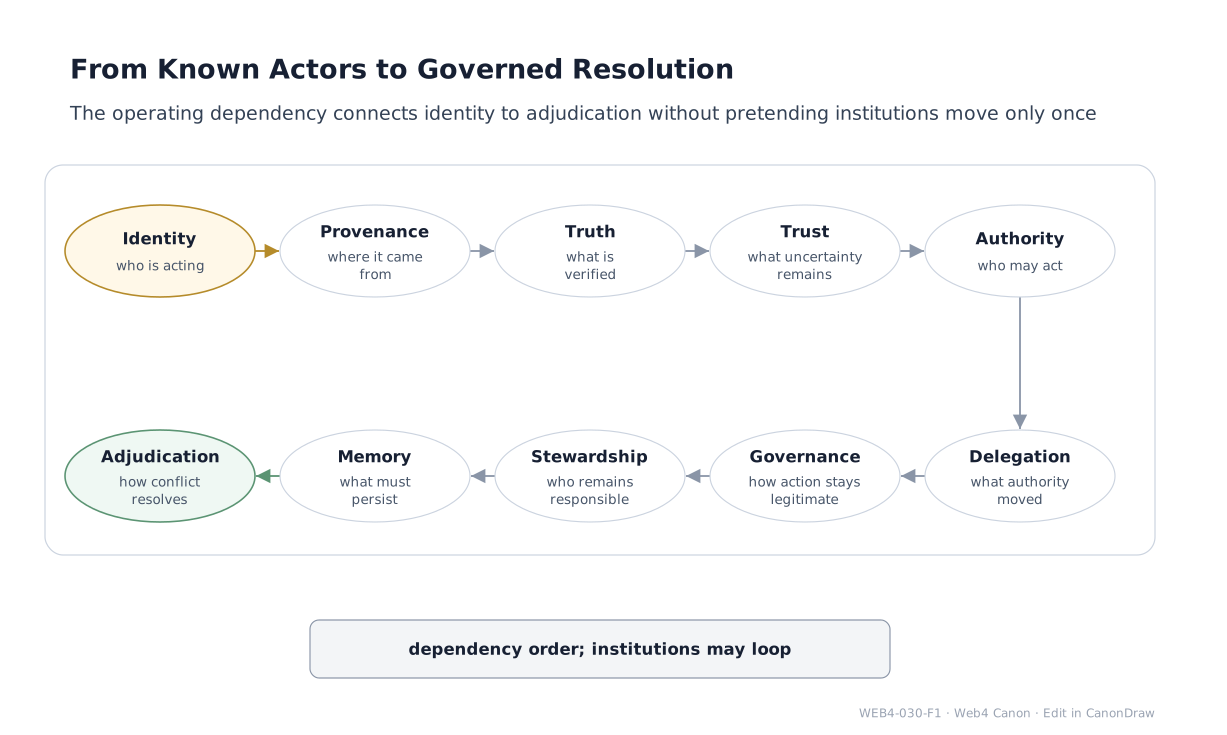
The simple version
Explain it like I’m ten
A restaurant is not just a kitchen. It needs a menu, ingredients, cooks, servers, rules, orders, checks, payments, cleaning, and a record for tomorrow. The pieces matter because they work together.
Tell it at dinner
A story worth remembering
A restaurant is not just a kitchen. It needs a menu, ingredients, cooks, servers, rules, orders, checks, payments, cleaning, and a record for tomorrow. The pieces matter because they work together.
Now make the same problem larger: replace the children and ordinary objects with people, organizations, AI agents, robots, records, and resources moving at machine speed. The Web4 Operating Model integrates the canon's identity, authority, delegation, governance, trust, memory, registries, assets, intelligence, adjudication, and applied-domain primitives into one institutional system. Executives gain a whole-system blueprint for moving from isolated AI features to durable, accountable intelligent operations.
Pause at the moment the small system could go wrong. That is the design question the paper keeps in view: not whether people or helpers are clever, but whether the surrounding structure preserves the intended meaning when action scales.
That is why the small story holds: web4 is an operating model for governable intelligent institutions.
Explain it to a CEO
Why leaders should care
Executives gain a whole-system blueprint for moving from isolated AI features to durable, accountable intelligent operations. The Web4 Operating Model integrates the canon's identity, authority, delegation, governance, trust, memory, registries, assets, intelligence, adjudication, and applied-domain primitives into one institutional system.
Explain it to an engineer
What the model means
Use the operating model as a compositional architecture with explicit primitives, interfaces, lifecycles, feedback, and governance. It is not a monolithic product or single protocol.
Talk hook
Web4 is not one more technology layer; it is how intelligent institutions operate.
Ask the room
Which critical institutional function is absent from your current AI operating model?
Go deeper
The Canon is the source of truth.
WEB4-030 formalizes this structure: The Web4 Operating Model integrates the canon's identity, authority, delegation, governance, trust, memory, registries, assets, intelligence, adjudication, and applied-domain primitives into one institutional system. The ordinary-life story is an intuition aid, not a replacement definition; the canonical paper remains authoritative for scope, terminology, limitations, and argument.
Read WEB4-030 — the authoritative paper →