WEB4-018 · WEB4
Attention Systems
Attention directs scarce thought, computation, and action.
01
Big idea
Attention directs scarce thought, computation, and action.
Picture
See the structure
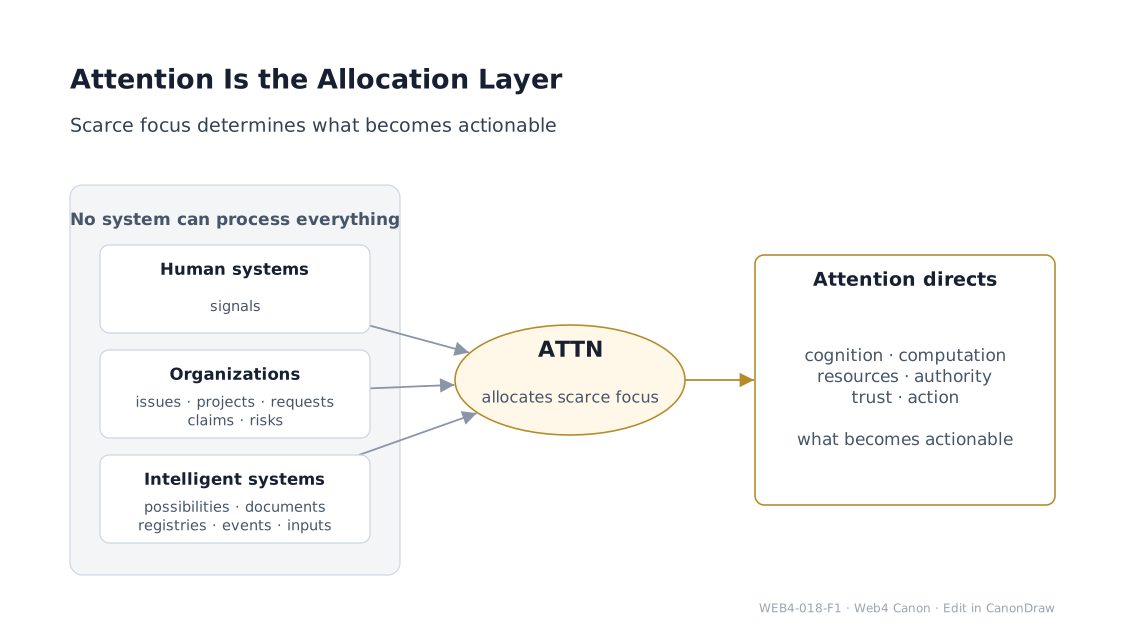
The simple version
Explain it like I’m ten
In a dark room, a flashlight can show only one place at a time. Pointing it at the door helps everyone leave; pointing it at glitter may make the important path disappear. Where the light goes changes what the group notices and does.
Tell it at dinner
A story worth remembering
In a dark room, a flashlight can show only one place at a time. Pointing it at the door helps everyone leave; pointing it at glitter may make the important path disappear. Where the light goes changes what the group notices and does.
Now make the same problem larger: replace the children and ordinary objects with people, organizations, AI agents, robots, records, and resources moving at machine speed. Attention is a governed allocation mechanism for scarce human and machine cognition, computation, resources, authority, trust, and action. Leaders who govern attention can reduce distraction, manipulation, and resource waste while prioritizing mission-critical signals.
Pause at the moment the small system could go wrong. That is the design question the paper keeps in view: not whether people or helpers are clever, but whether the surrounding structure preserves the intended meaning when action scales.
That is why the small story holds: attention directs scarce thought, computation, and action.
Explain it to a CEO
Why leaders should care
Leaders who govern attention can reduce distraction, manipulation, and resource waste while prioritizing mission-critical signals. Attention is a governed allocation mechanism for scarce human and machine cognition, computation, resources, authority, trust, and action.
Explain it to an engineer
What the model means
Represent attention sources, targets, budgets, ranking signals, incentives, feedback, and provenance. Ranking is an allocation decision with governance consequences, not a neutral display choice.
Talk hook
Before an intelligent system acts, something decides what it notices.
Ask the room
Who benefits from the way your systems allocate attention today?
Go deeper
The Canon is the source of truth.
WEB4-018 formalizes this structure: Attention is a governed allocation mechanism for scarce human and machine cognition, computation, resources, authority, trust, and action. The ordinary-life story is an intuition aid, not a replacement definition; the canonical paper remains authoritative for scope, terminology, limitations, and argument.
Read WEB4-018 — the authoritative paper →