WEB4-029 · WEB4
Dispute, Appeal, and Adjudication
Legitimate systems need a fair way to disagree and correct decisions.
01
Big idea
Legitimate systems need a fair way to disagree and correct decisions.
Picture
See the structure
The simple version
Explain it like I’m ten
A referee calls a goal out. The captain asks for a review, the replay shows the ball crossed the line, and the ruling changes. Everyone can see who decided, what evidence was used, and what the final score became.
Tell it at dinner
A story worth remembering
A referee calls a goal out. The captain asks for a review, the replay shows the ball crossed the line, and the ruling changes. Everyone can see who decided, what evidence was used, and what the final score became.
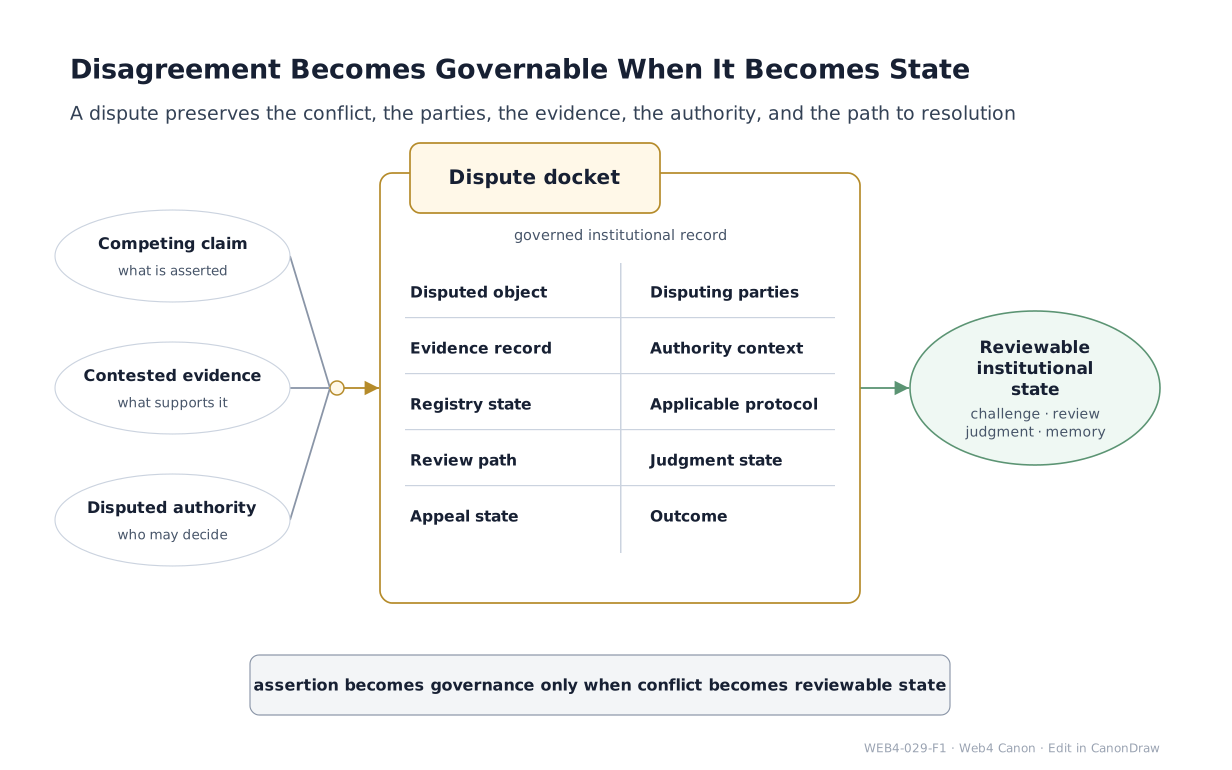
Now make the same problem larger: replace the children and ordinary objects with people, organizations, AI agents, robots, records, and resources moving at machine speed. Web4 institutions require governed dispute, appeal, evidence review, adjudication, remedy, and memory because contradiction and contested authority are inevitable. A credible appeals architecture protects legitimacy, reduces arbitrary decisions, and creates learning from conflict.
Pause at the moment the small system could go wrong. That is the design question the paper keeps in view: not whether people or helpers are clever, but whether the surrounding structure preserves the intended meaning when action scales.
That is why the small story holds: legitimate systems need a fair way to disagree and correct decisions.
Explain it to a CEO
Why leaders should care
A credible appeals architecture protects legitimacy, reduces arbitrary decisions, and creates learning from conflict. Web4 institutions require governed dispute, appeal, evidence review, adjudication, remedy, and memory because contradiction and contested authority are inevitable.
Explain it to an engineer
What the model means
Define standing, jurisdiction, evidence rules, timelines, reviewer independence, decisions, remedies, appeal levels, conflicts, and provenance. Adjudication should preserve prior history while changing effective state.
Talk hook
Trust is tested not when everyone agrees, but when the system must handle a serious disagreement.
Ask the room
Can a person or agent challenge a consequential automated decision and receive a reasoned remedy?
Go deeper
The Canon is the source of truth.
WEB4-029 formalizes this structure: Web4 institutions require governed dispute, appeal, evidence review, adjudication, remedy, and memory because contradiction and contested authority are inevitable. The ordinary-life story is an intuition aid, not a replacement definition; the canonical paper remains authoritative for scope, terminology, limitations, and argument.
Read WEB4-029 — the authoritative paper →