WEB4-009 · WEB4
Reputation Systems for Agents
Reputation is memory at scale.
01
Big idea
Reputation is memory at scale.
Picture
See the structure
The simple version
Explain it like I’m ten
One child always returns borrowed toys clean and on time. Another often loses pieces. A notebook remembers those past choices so the next child can decide what to lend and what rules to use.
Tell it at dinner
A story worth remembering
One child always returns borrowed toys clean and on time. Another often loses pieces. A notebook remembers those past choices so the next child can decide what to lend and what rules to use.
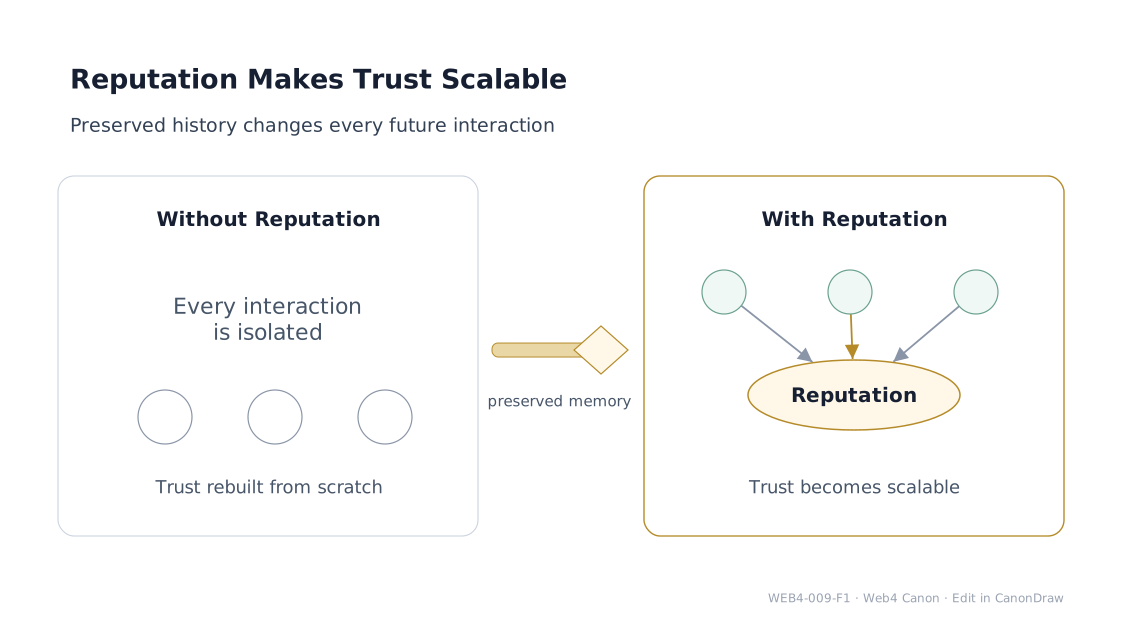
Now make the same problem larger: replace the children and ordinary objects with people, organizations, AI agents, robots, records, and resources moving at machine speed. Agent reputation accumulates and transmits relevant performance history so trust need not be rebuilt from zero in every interaction. Reputation can improve selection, pricing, supervision, and risk controls, provided organizations prevent context collapse and gaming.
Pause at the moment the small system could go wrong. That is the design question the paper keeps in view: not whether people or helpers are clever, but whether the surrounding structure preserves the intended meaning when action scales.
That is why the small story holds: reputation is memory at scale.
Explain it to a CEO
Why leaders should care
Reputation can improve selection, pricing, supervision, and risk controls, provided organizations prevent context collapse and gaming. Agent reputation accumulates and transmits relevant performance history so trust need not be rebuilt from zero in every interaction.
Explain it to an engineer
What the model means
Record attributable events, evidence quality, context, recency, disputes, and decay rather than a single permanent score. Reputation informs future decisions but is distinct from identity, trust, and authority.
Talk hook
If an agent has worked a million times, why should the million-and-first customer know nothing about its history?
Ask the room
What history should follow an agent, and what history should be allowed to fade?
Go deeper
The Canon is the source of truth.
WEB4-009 formalizes this structure: Agent reputation accumulates and transmits relevant performance history so trust need not be rebuilt from zero in every interaction. The ordinary-life story is an intuition aid, not a replacement definition; the canonical paper remains authoritative for scope, terminology, limitations, and argument.
Read WEB4-009 — the authoritative paper →